Tarot Spreads Guide is an independent online resource for people who want to learn tarot as a cultural and reflective practice. The site lives at tarotspreadsguide.com and is operated as a small content project. It is not a company office, a certified school, or a church. There is no invented staff directory and no claim of institutional partnership.
The purpose of the site is to publish durable study pages: how a 78-card deck is structured, what common spreads are for, how to ask a question that can bear an answer, and how to keep a journal so a reading is more than a mood. The intended readers are beginners and ordinary adults who are curious, skeptical, or returning to the cards after a long gap.
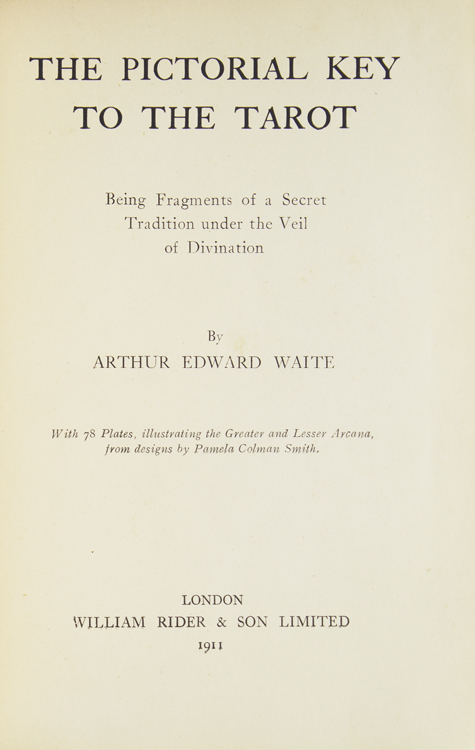
Content is written as educational notes in conversation with the widely taught Rider–Waite–Smith image tradition. Card pictures on this site are scans of Pamela Colman Smith’s 1909 drawings, which are in the public domain in the United States and are provided via Wikimedia Commons. We do not use later copyrighted commercial reprints. Interpretations are original wording. They should be read beside your own deck, not as a replacement for looking.
Tarot is positioned here as education, culture, entertainment, and self-reflection. The cards are treated as a visual language and a prompt for attention. They are not treated as a scientific instrument, a medical test, a legal opinion, or a way to guarantee love, money, or safety. If a page ever sounds like a promise, the disclaimer is the governing text.
Pages are updated when a guide needs a clearer example or when a spread instruction should be less easy to misuse. There is no fake changelog of daily news. Last-updated dates appear on articles so you can see when a piece was last edited. New cards, spreads, and essays will be added as the project continues.
Questions, corrections, and practical notes are welcome at likuieeg@gmail.com. If you found an error in a meaning or a broken link, say so. Independent sites stay useful when readers treat them as editable public notebooks rather than as oracles.