Introduction
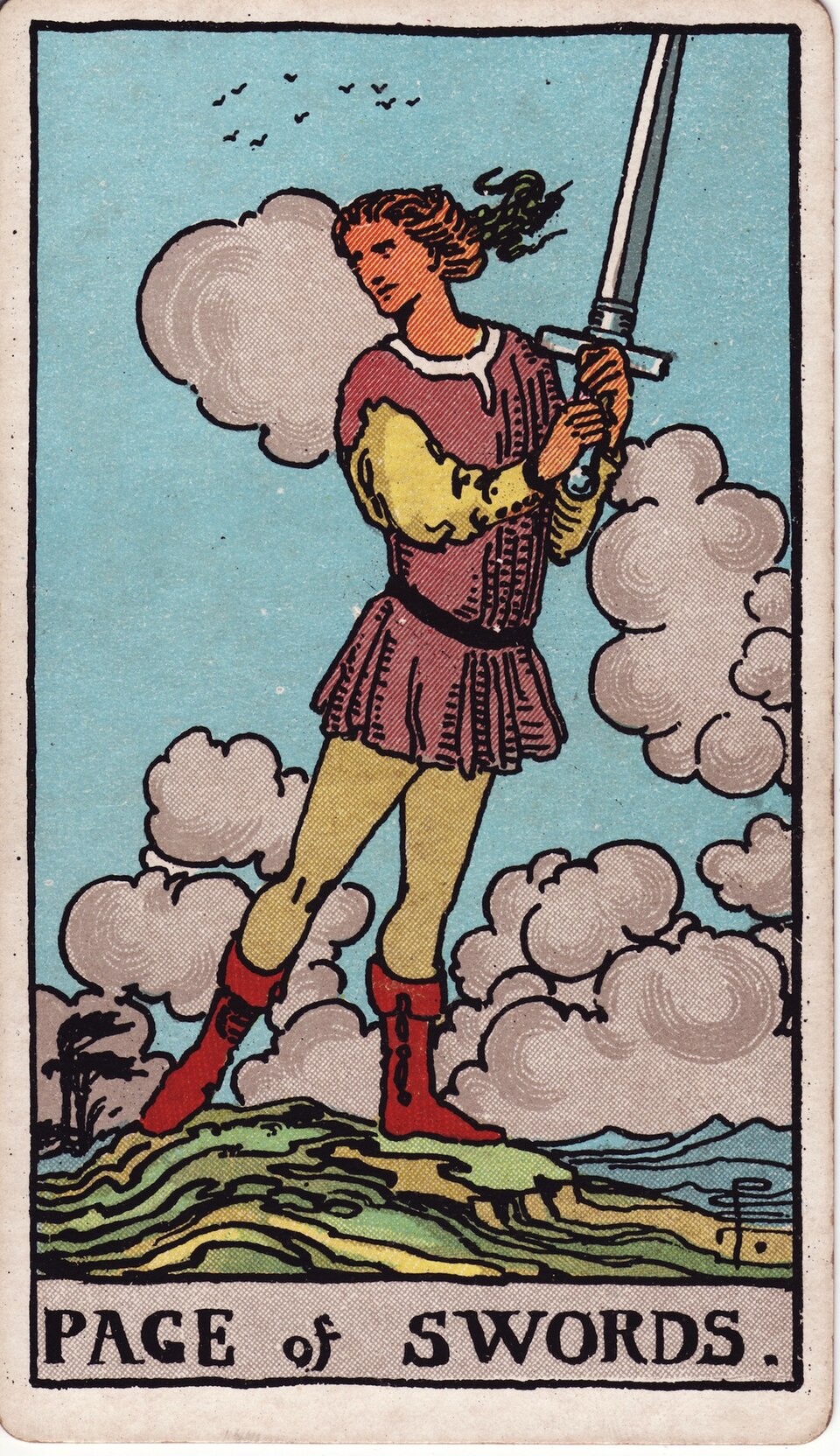
The Page of Swords is an apprentice of air: questions, notes, watchfulness, news. Pages learn the suit; swords learn by asking.
Upright meaning
Upright, it can describe research, a curious beginner, or a message that needs fact-checking. Stay intellectually honest.
Reversed meaning
Reversed, gossip, spying, or arguing as a hobby. Put the sword down and verify.
Love
In love, questions, mixed texts, or learning someone's language. Curiosity should not become interrogation.
Career
At work, students, analysts-in-training, and first drafts of strategy. Cite sources.
General interpretation
The Page of Swords is an apprentice of air: questions, notes, watchfulness, news. In a general reading, the Page of Swords sits at the learner’s stage: the practical question is how thought, language, and conflict are doing at that point in the story. Write what is happening in ordinary language first; the standard one-line reading of the Page of Swords will fit better afterwards.
Symbolism
Windswept hair and a raised sword in many decks show alertness that can become defensive.
Questions for reflection
- What question would make this clearer?
- Where am I collecting information without a purpose?
- Which three-day action would tell you whether the message of the Page of Swords is real in your case?
Related cards and spreads
FAQ
It can discuss news and watchfulness. Do not assume malice.
Pick one drawn detail from the Page of Swords, note how it bears on your question, and finish by choosing one modest action. Do not treat the card as a command.
Sources and further reading
The Page of Swords appears here in the 1909 Rider–Waite–Smith drawing by Pamela Colman Smith, public domain, via the Wikimedia Commons collection of the deck. The suit’s background is covered at Suit of Swords on Wikipedia. Waite’s period commentary on this part of the deck is in The Pictorial Key to the Tarot (1911, public domain).
These notes are cultural study material. They do not predict events, diagnose health, or replace professional advice.