Introduction
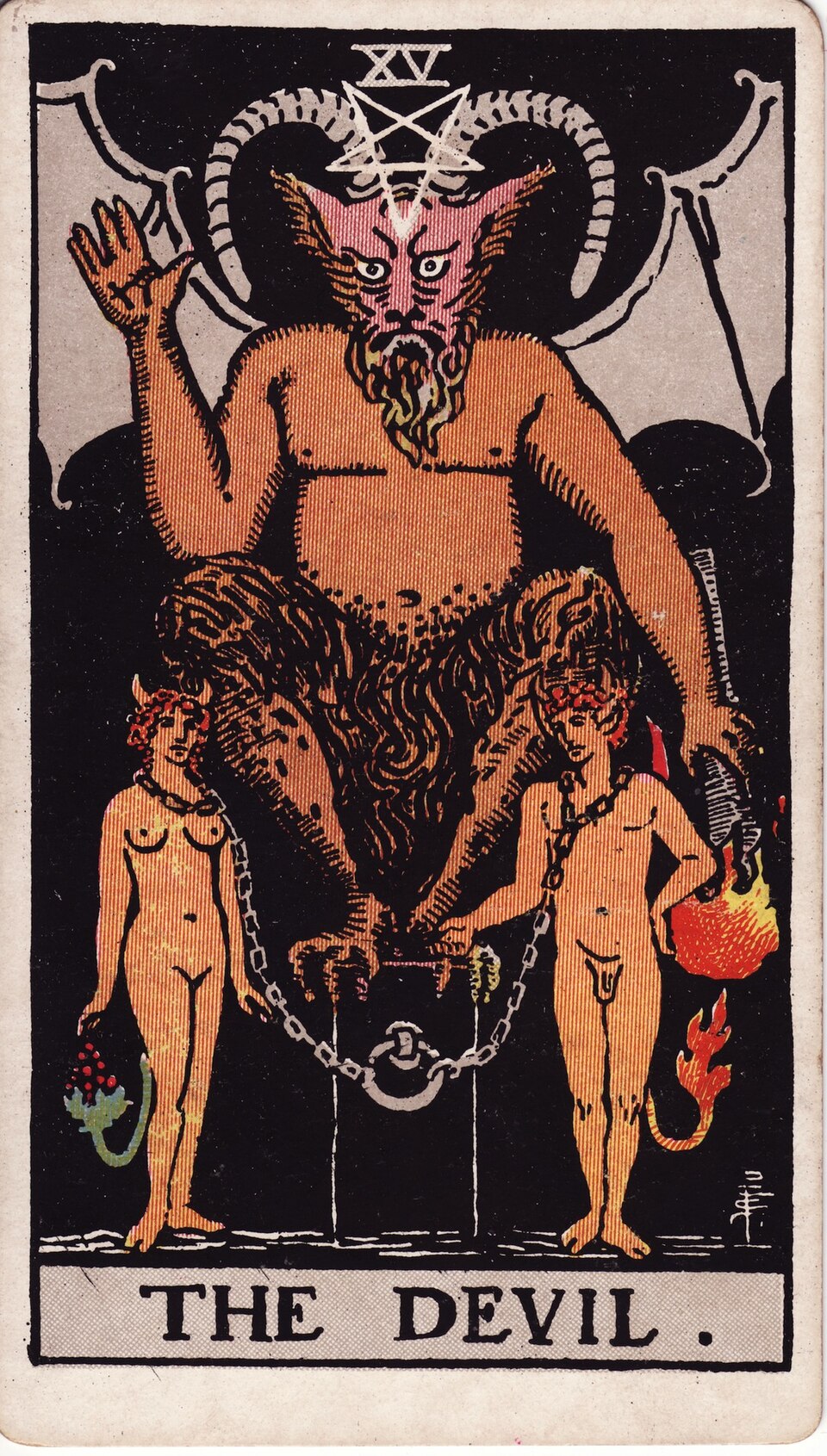
The Devil is a card about bondage, appetite, and stories that feel like they cannot be edited. Many decks show chained figures who could lift the chains. Educational tarot uses it to discuss compulsion, materialism, and power-over dynamics without glamorizing harm.
Upright meaning
Upright, The Devil can describe a habit loop, a golden cage, a job that pays in a way that silences you, or a relationship organized around control. It asks what is being traded and whether the trade is still worth it. It is not an accusation of being evil.
Reversed meaning
Reversed, it can show the first honest look at a pattern, a loosening, or a rebound into a new cage. It may also describe denial cracking. Freedom still needs a plan; insight is not the same as exit.
Love
In love, this card can highlight jealousy, obsession, chemistry without respect, or staying for fear of being alone. It is a prompt to look at consent and safety. If you are in danger, contact local support services rather than using cards as a plan.
Career
Career contexts include exploitative conditions, status addiction, and "just one more year" bargains. It can also describe creative work hijacked by metrics. Name the chain: money, image, access, fear.
General interpretation
Read The Devil with ruthless practicality. List the benefit you get from the pattern. Shame skips that step and then the pattern returns. This site does not treat the card as a supernatural entity.
Symbolism
Inverted pentagrams, torchlight, and animal features in historical decks dramatize appetite. Loose chains are the teaching detail. Look at whether figures look at each other, at the central figure, or away.
Questions for reflection
- What do I get from this pattern that I do not want to admit?
- Which chain is actually loose if I tested it this week?
- Who benefits if I stay confused?
Related cards and spreads
FAQ
It usually points to entanglement, appetite, or control. Take safety seriously, but do not treat the card as a supernatural diagnosis.
Some readers discuss it as shadow humor or kink-aware consent. The ethical test remains the same: is anyone trapped, deceived, or harmed?
These notes are cultural study material. They do not predict events, diagnose health, or replace professional advice.