Introduction
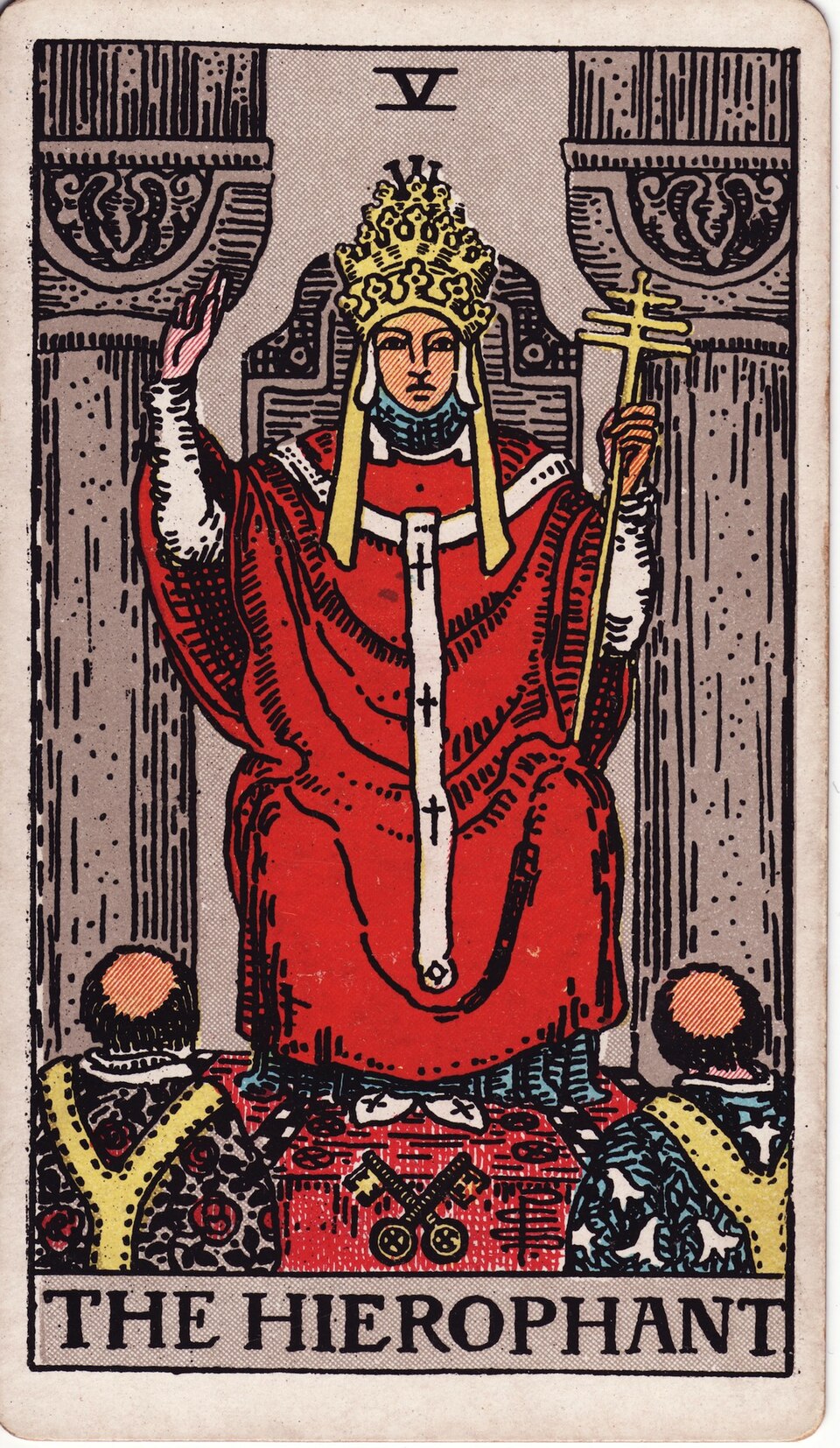
The Hierophant is a teaching and tradition card. Many decks show a religious official, students, and keys. For a modern study site, the useful translation is lineage: schools, mentors, shared language, and the institutions that pass knowledge along.
Upright meaning
Upright, The Hierophant can describe formal learning, ethical codes, cultural belonging, or seeking a trusted interpreter. It may point to doing a thing "the received way" before inventing a private method. It can also simply mean a class, a book, or a community of practice.
Reversed meaning
Reversed, it can show stale dogma, hypocrisy, or a necessary departure from a group story. It may also describe DIY learning that is skipping basics. The question is not rebellion versus obedience; it is whether the tradition still serves the work.
Love
In love, The Hierophant can describe shared values, family expectations, or a relationship that wants a public form. It is not a marriage prediction. It asks what vows, spoken or unspoken, you are actually living.
Career
Career contexts include certification, onboarding, professional ethics, and workplaces with strong cultures. It can support apprenticeship. It can also warn that fitting in has become more important than telling the truth.
General interpretation
Use The Hierophant when studying tarot itself: you are in a lineage of images and teaching. Cite sources in your journal. Notice when you are repeating a phrase you cannot explain.
Symbolism
Keys often suggest access to a teaching. Raised fingers and paired attendants can show transmission. Architecture may look like a church, a university, or any hall of received knowledge. Your deck may secularize the image; describe what is there.
Questions for reflection
- Whose teaching am I following, and can I explain why?
- What basic skill did I skip because I wanted a personal style?
- Where is belonging costing me honesty?
Related cards and spreads
FAQ
No, but structured study helps. The Hierophant is a reminder that shared vocabulary exists so people can compare notes without claiming secret authority.
Historically it uses religious imagery. On this site it is treated as a cultural symbol about teaching, ethics, and tradition.
These notes are cultural study material. They do not predict events, diagnose health, or replace professional advice.