Introduction
The Ace of Wands is a beginning in the fire suit: appetite for making, moving, and starting a spark. Aces are seed cards; wands are the suit of will, heat, and creative initiative.
Upright meaning
Upright, it can describe a new project, a surge of motivation, or a chance to try a bolder method. It is permission to prototype, not a finished empire.
Reversed meaning
Reversed, the spark may be delayed, scattered, or mistaken for a whole plan. Rest and a smaller experiment usually help more than self-scolding.
Love
In love, it can be a fresh attraction or a desire to rekindle play. Chemistry still needs conversation.
Career
At work, it often marks a pitch, a side project, or the first burst of a launch. Capture the idea in a next action.
General interpretation
The Ace of Wands is a beginning in the fire suit: appetite for making, moving, and starting a spark. In a general reading, the Ace of Wands sits at a beginning that has not yet chosen a direction: the practical question is how drive, work, and initiative are doing at that point in the story. Write what is happening in ordinary language first; the standard one-line reading of the Ace of Wands will fit better afterwards.
Symbolism
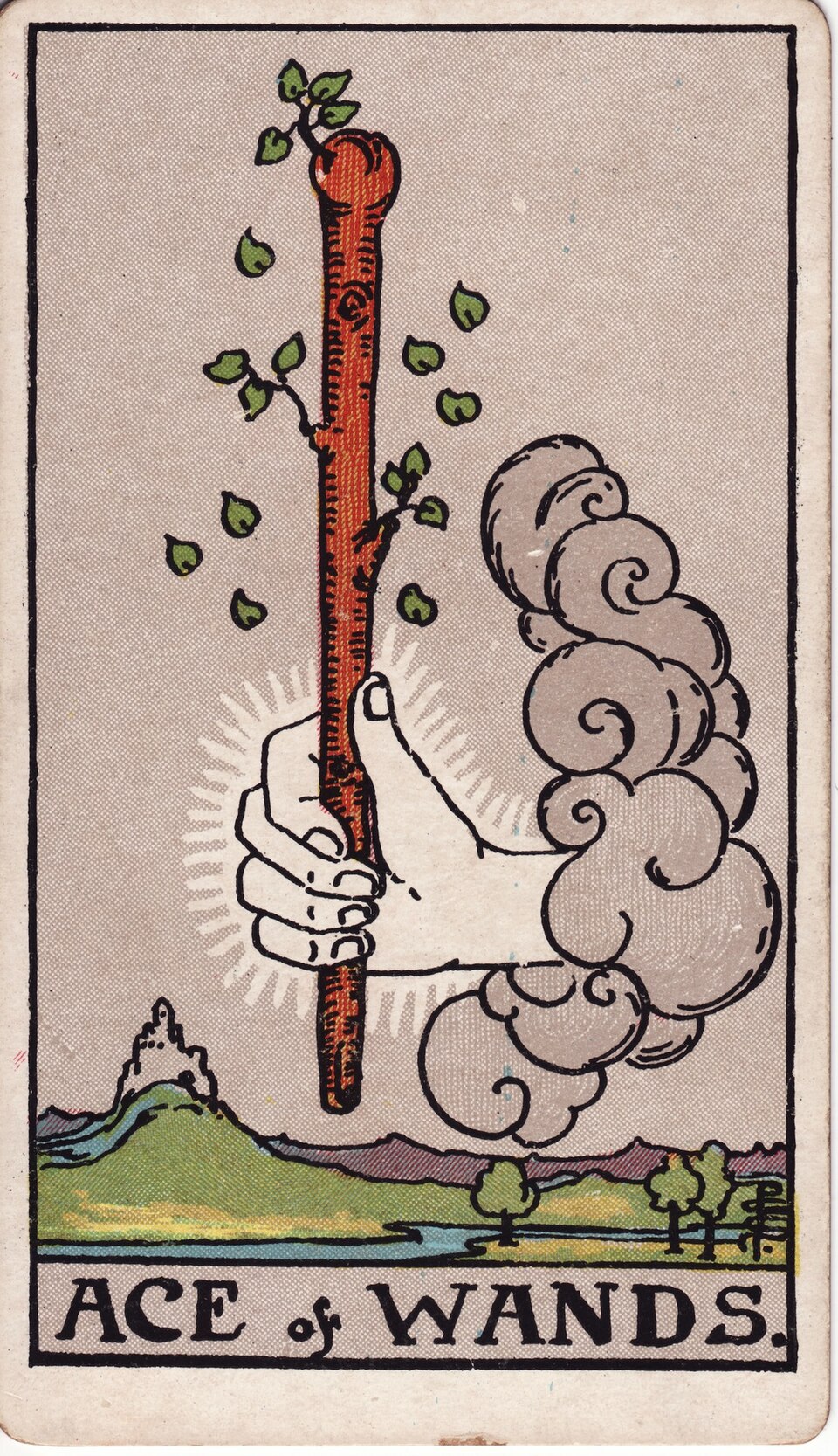
A hand holding a wand, budding leaves, and a landscape waiting to be walked are common study images of potential rather than harvest.
Questions for reflection
- What wants a first prototype rather than a manifesto?
- Where am I waiting for inspiration that would arrive if I moved a little?
- Which three-day action would tell you whether the message of the Ace of Wands is real in your case?
Related cards and spreads
FAQ
No. It is a beginning-of-energy card. Career changes need practical planning beyond a single card.
Pick one drawn detail from the Ace of Wands, note how it bears on your question, and finish by choosing one modest action. Do not treat the card as a command.
Sources and further reading
The Ace of Wands appears here in the 1909 Rider–Waite–Smith drawing by Pamela Colman Smith, public domain, via the Wikimedia Commons collection of the deck. The suit’s background is covered at Suit of Wands on Wikipedia. Waite’s period commentary on this part of the deck is in The Pictorial Key to the Tarot (1911, public domain).
These notes are cultural study material. They do not predict events, diagnose health, or replace professional advice.