Introduction
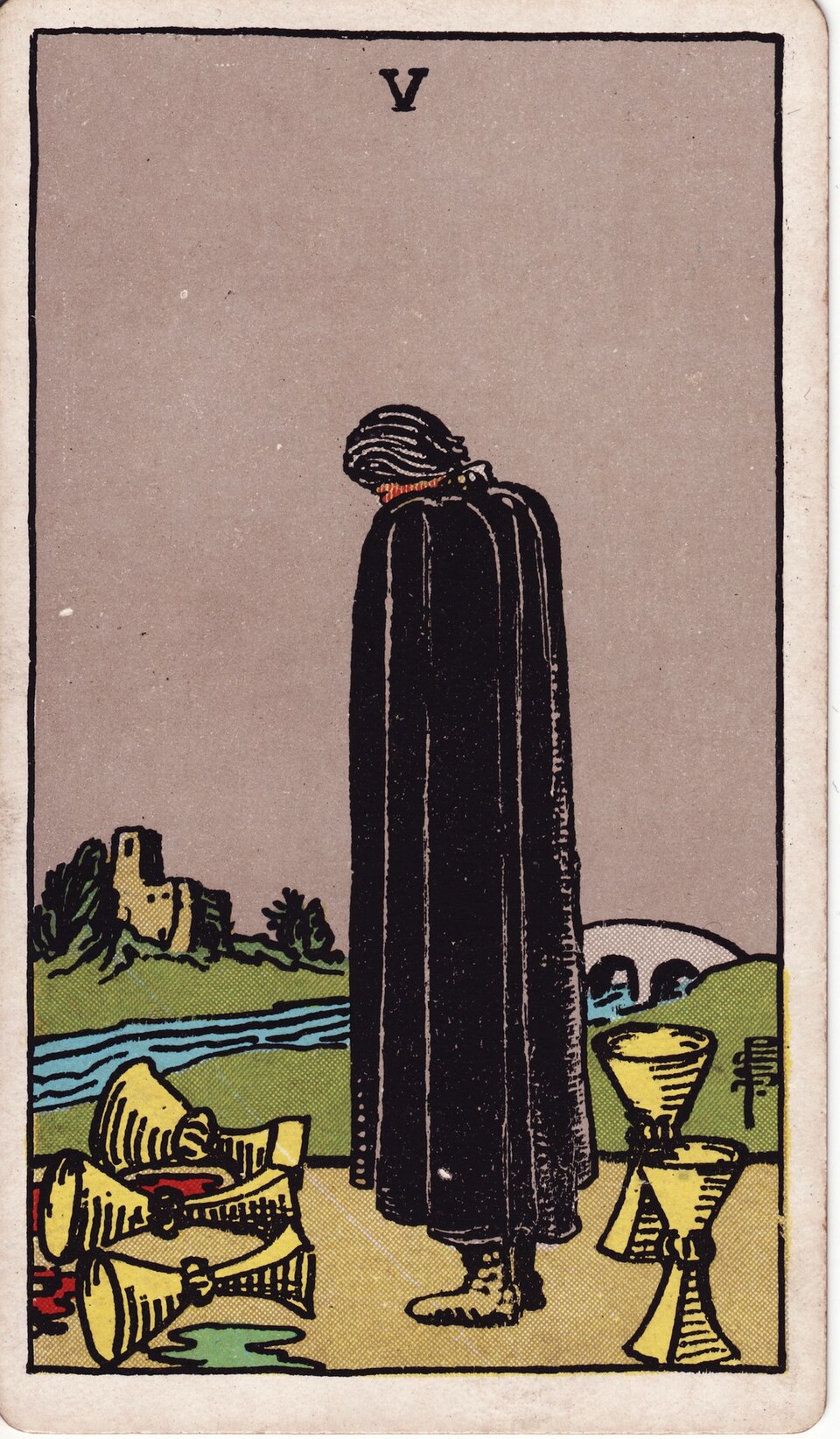
The Five of Cups is grief in the foreground: spilled cups, two still standing. It is mourning what is lost without denying what remains.
Upright meaning
Upright, it can describe disappointment, an apology needed, or a season of looking at the spill. Grief is allowed to take time.
Reversed meaning
Reversed, turning toward the standing cups, or rushing cheer. Do not skip the funeral for the leftover wine.
Love
In love, heartbreak, regret, or the work of repair after a hurt. Remaining love, if any, is the standing cups—not a command to stay.
Career
At work, a failed pitch, a lost client, or morale after a mistake. Debrief, then use what is left.
General interpretation
The Five of Cups is grief in the foreground: spilled cups, two still standing. In a general reading, use the Five of Cups to locate disruption or contest that changes the situation, then check how feeling, connection, and inner life are behaving in the querent’s own account. Before borrowing the short phrase usually attached to the Five of Cups, write the situation in your own plain words.
Symbolism
A bridge in some decks is a later path; you do not have to cross it on the first day.
Questions for reflection
- What am I mourning, in one concrete sentence?
- Which two cups are still upright if I look to the side?
- If the Five of Cups describes your current situation, what could you actually test before the week ends?
Related cards and spreads
FAQ
It can discuss loss. It does not issue a breakup order.
Start from one visual detail in the Five of Cups, write how it answers the question you asked, and set one small task to follow up. Do not treat the card as a command.
Sources and further reading
The Five of Cups is shown here as drawn by Pamela Colman Smith for the 1909 Rider–Waite–Smith deck — public domain, via Wikimedia Commons. The suit’s wider tradition is described at Suit of Cups on Wikipedia. For the primary text behind the deck, see The Pictorial Key to the Tarot (1911, public domain).
These notes are cultural study material. They do not predict events, diagnose health, or replace professional advice.