Introduction
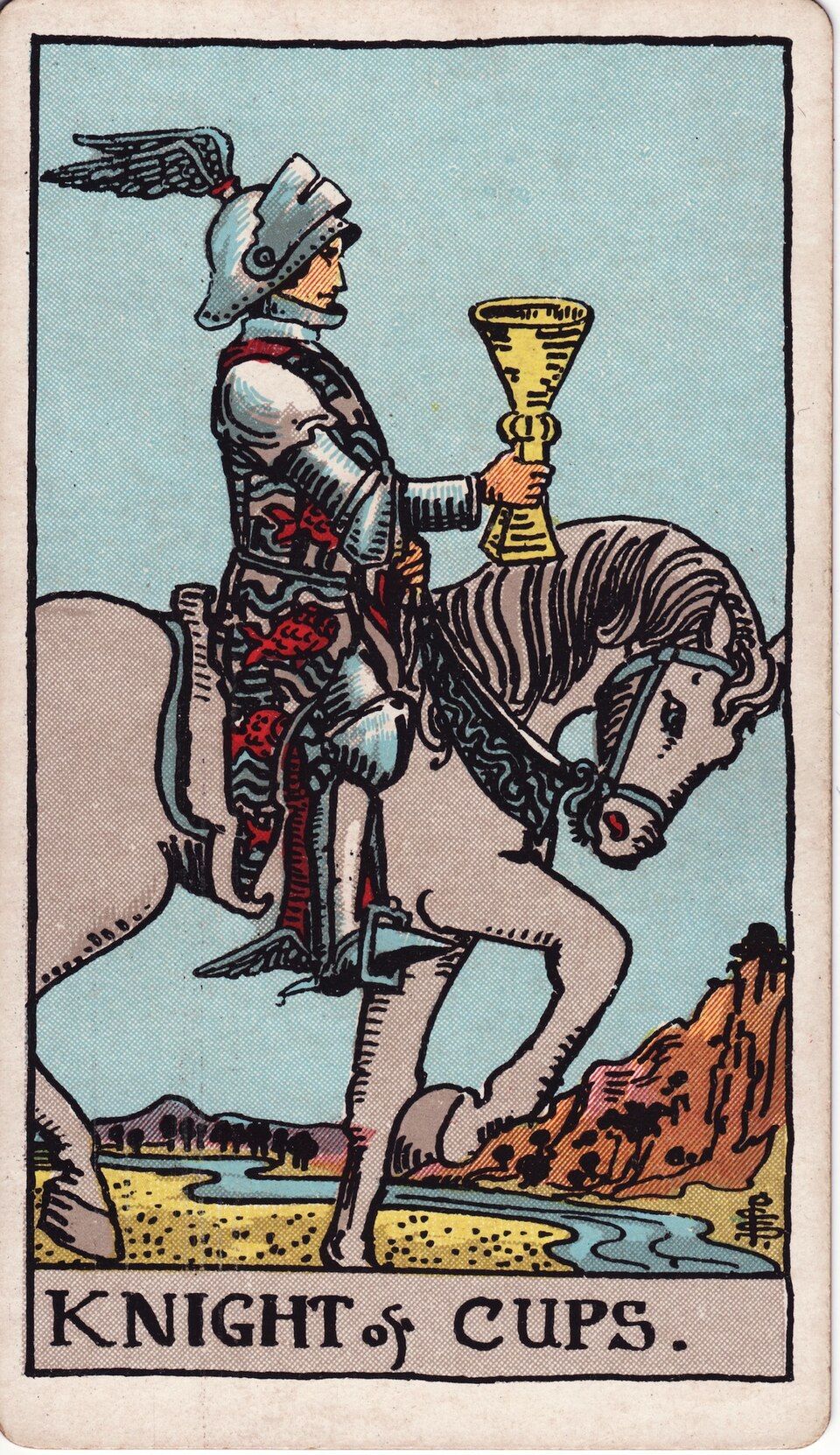
The Knight of Cups is a quest of feeling: offering, romance, art, and the risk of beautiful speeches. Knights move; this one moves with a cup forward.
Upright meaning
Upright, it can describe a sincere invitation, a creative pursuit, or approaching a conflict with care. Match words to follow-through.
Reversed meaning
Reversed, mood swings, empty charm, or a quest that is only aesthetic. Ask for examples.
Love
In love, courtship energy. Enjoy it, and keep your feet. Idealization is a known occupational hazard of this knight.
Career
At work, pitching with story, client care, and design. Story still needs a spec.
General interpretation
The Knight of Cups is a quest of feeling: offering, romance, art, and the risk of beautiful speeches. In a general reading, the Knight of Cups sits at the mover’s stage: the practical question is how feeling, connection, and inner life are doing at that point in the story. Write what is happening in ordinary language first; the standard one-line reading of the Knight of Cups will fit better afterwards.
Symbolism
A horse at a measured pace in many decks shows that this quest can be graceful rather than frantic.
Questions for reflection
- What am I offering, and can I deliver it next week?
- Where is romance a costume for avoiding a plain ask?
- Which three-day action would tell you whether the message of the Knight of Cups is real in your case?
Related cards and spreads
FAQ
It describes a style of approaching feeling. It is not an ID card.
Pick one drawn detail from the Knight of Cups, note how it bears on your question, and finish by choosing one modest action. Do not treat the card as a command.
Sources and further reading
The Knight of Cups appears here in the 1909 Rider–Waite–Smith drawing by Pamela Colman Smith, public domain, via the Wikimedia Commons collection of the deck. The suit’s background is covered at Suit of Cups on Wikipedia. Waite’s period commentary on this part of the deck is in The Pictorial Key to the Tarot (1911, public domain).
These notes are cultural study material. They do not predict events, diagnose health, or replace professional advice.