Introduction
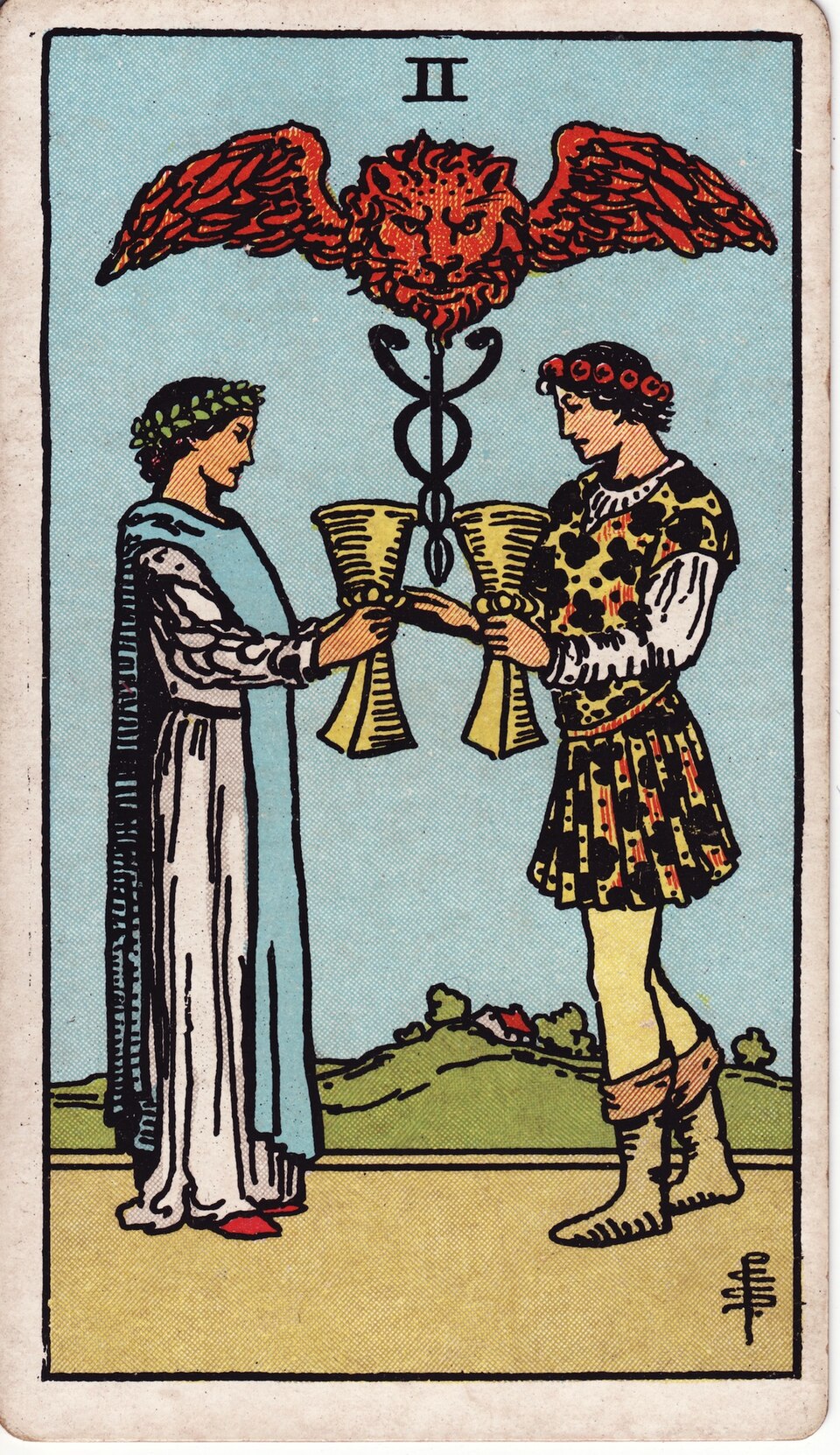
The Two of Cups is mutuality: two vessels, a meeting, a pact that can be small and still real. It is partnership as exchange, not as fusion.
Upright meaning
Upright, it can describe a good working alliance, a date with reciprocity, or making peace. Notice whether both cups are actually full.
Reversed meaning
Reversed, uneven giving, a missed meeting, or chemistry without terms. Repair starts with what each person can honestly offer.
Love
In love, a bond, a reconciliation attempt, or friendship crossing into more. Mutuality is observed, not declared by a card.
Career
At work, a useful pair, a client match, or a handshake that should become a contract. Warmth plus writing.
General interpretation
The Two of Cups is mutuality: two vessels, a meeting, a pact that can be small and still real. In a general reading, use the Two of Cups to locate a first decision or exchange, then check how feeling, connection, and inner life are behaving in the querent’s own account. Before borrowing the short phrase usually attached to the Two of Cups, write the situation in your own plain words.
Symbolism
A caduceus or lion-headed staff in some decks suggests that attraction still needs ethics and health.
Questions for reflection
- What would reciprocity look like in a calendar, not a speech?
- Where am I calling something a partnership that is still a performance?
- If the Two of Cups describes your current situation, what could you actually test before the week ends?
Related cards and spreads
FAQ
No. It is a mutuality card. Deep connection is lived, not certified.
Start from one visual detail in the Two of Cups, write how it answers the question you asked, and set one small task to follow up. Do not treat the card as a command.
Sources and further reading
The Two of Cups is shown here as drawn by Pamela Colman Smith for the 1909 Rider–Waite–Smith deck — public domain, via Wikimedia Commons. The suit’s wider tradition is described at Suit of Cups on Wikipedia. For the primary text behind the deck, see The Pictorial Key to the Tarot (1911, public domain).
These notes are cultural study material. They do not predict events, diagnose health, or replace professional advice.