Introduction
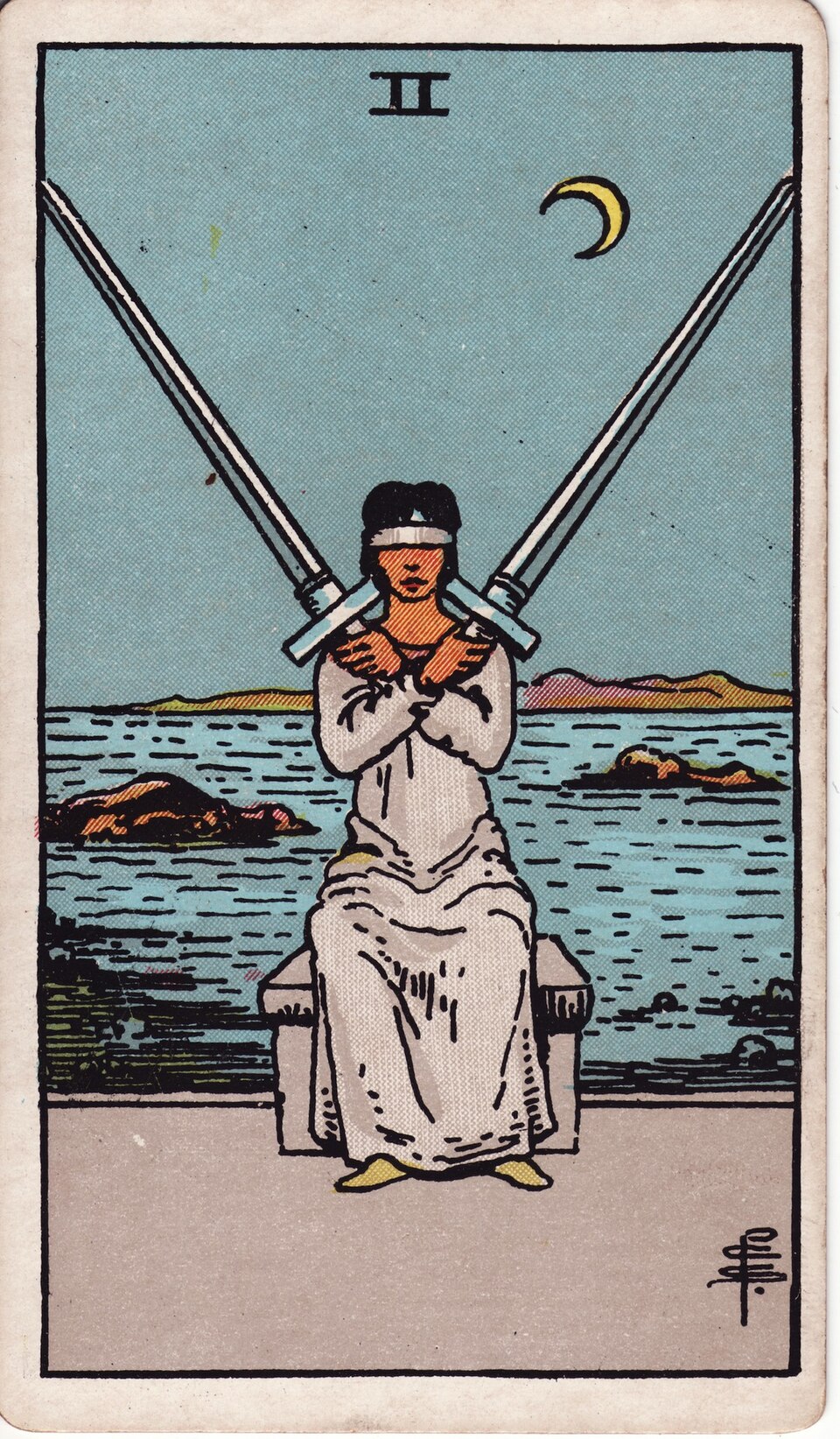
The Two of Swords is a stalemate of thought: crossed blades, often a blindfold. It is a decision delayed, sometimes for peace, sometimes for fear.
Upright meaning
Upright, it can describe needing more data, a truce, or holding two ideas without rushing. Name the two options on paper.
Reversed meaning
Reversed, the blindfold comes off, or the truce explodes. Choose a smaller decision if the big one is frozen.
Love
In love, mixed feelings, avoiding a talk, or keeping the peace at a cost. Peace that requires blindness is a loan.
Career
At work, competing briefs, a hiring tie, or waiting on legal. Deadlines still exist.
General interpretation
The Two of Swords is a stalemate of thought: crossed blades, often a blindfold. In a general reading, the Two of Swords sits at a first decision or exchange: the practical question is how thought, language, and conflict are doing at that point in the story. Write what is happening in ordinary language first; the standard one-line reading of the Two of Swords will fit better afterwards.
Symbolism
Water behind a seated figure in many decks shows that feeling is present even when the pose is intellectual.
Questions for reflection
- What two options am I balancing, exactly?
- What would I see if the blindfold were off for ten minutes?
- Which three-day action would tell you whether the message of the Two of Swords is real in your case?
Related cards and spreads
FAQ
It can support a pause. Infinite pause is another decision.
Pick one drawn detail from the Two of Swords, note how it bears on your question, and finish by choosing one modest action. Do not treat the card as a command.
Sources and further reading
The Two of Swords appears here in the 1909 Rider–Waite–Smith drawing by Pamela Colman Smith, public domain, via the Wikimedia Commons collection of the deck. The suit’s background is covered at Suit of Swords on Wikipedia. Waite’s period commentary on this part of the deck is in The Pictorial Key to the Tarot (1911, public domain).
These notes are cultural study material. They do not predict events, diagnose health, or replace professional advice.