Introduction
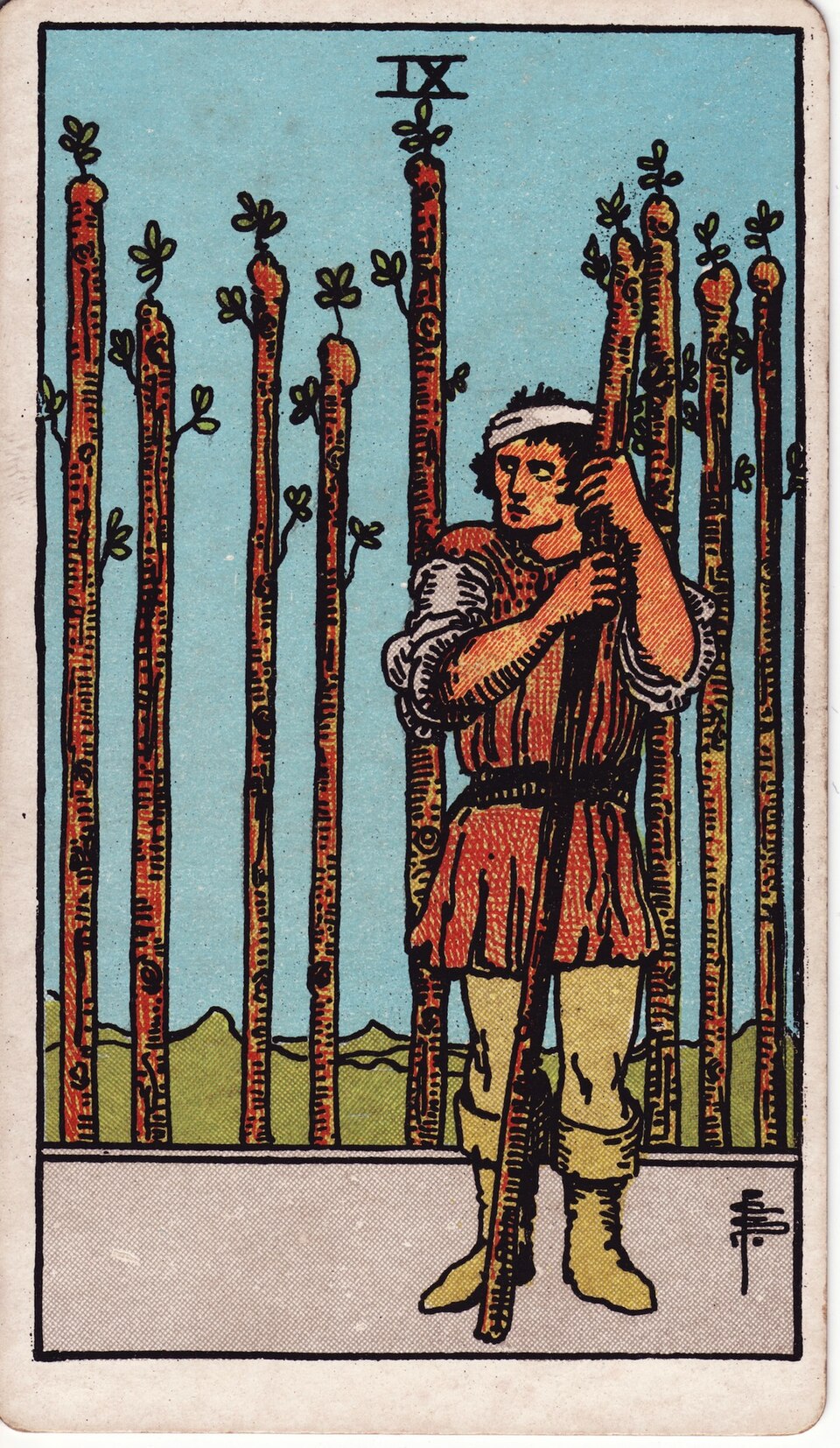
The Nine of Wands is the last watch: a bandaged figure, a row of wands like a fence. It is stamina after previous rounds, and the temptation to treat everyone as a continuation of the last fight.
Upright meaning
Upright, it can describe persistence, recovery, and protecting work that is almost done. Rest is part of the defense.
Reversed meaning
Reversed, hypervigilance or collapsing before the finish. Get a second pair of eyes; isolation makes fences taller.
Love
In love, it can be caution after being hurt, or a partner who is tired of proving safety. Trauma-informed pacing is not the same as testing forever.
Career
At work, final QA, on-call weeks, and almost-shipped projects. Distinguish real risk from leftover armor.
General interpretation
The Nine of Wands is the last watch: a bandaged figure, a row of wands like a fence. In a general reading, use the Nine of Wands to locate the late stage where the outcome is close but not settled, then check how drive, work, and initiative are behaving in the querent’s own account. Before borrowing the short phrase usually attached to the Nine of Wands, write the situation in your own plain words.
Symbolism
The bandage, when present, is a teaching detail: you are not starting from zero, and that matters.
Questions for reflection
- What am I guarding that still needs guarding?
- Where is last season's armor interfering with this season's task?
- If the Nine of Wands describes your current situation, what could you actually test before the week ends?
Related cards and spreads
FAQ
No. Persistence is useful; ignoring injury is not. Adjust load.
Start from one visual detail in the Nine of Wands, write how it answers the question you asked, and set one small task to follow up. Do not treat the card as a command.
Sources and further reading
The Nine of Wands is shown here as drawn by Pamela Colman Smith for the 1909 Rider–Waite–Smith deck — public domain, via Wikimedia Commons. The suit’s wider tradition is described at Suit of Wands on Wikipedia. For the primary text behind the deck, see The Pictorial Key to the Tarot (1911, public domain).
These notes are cultural study material. They do not predict events, diagnose health, or replace professional advice.