Introduction
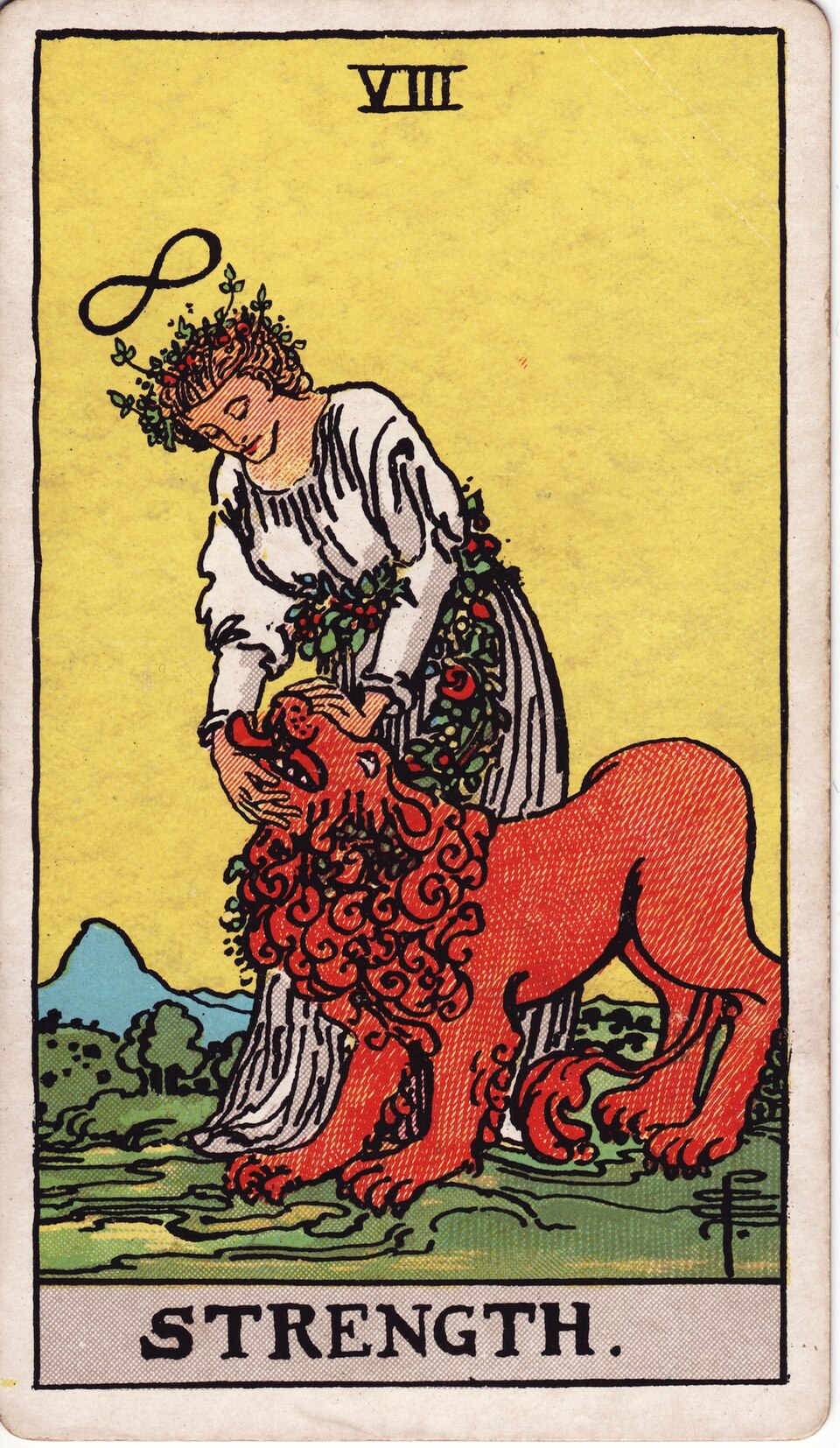
Strength, numbered VIII in Rider-Waite-Smith influenced decks (XI in some continental orders), usually shows a person with a lion. The lesson is not domination. It is the kind of courage that stays in the room with a difficult feeling without becoming cruel.
Upright meaning
Upright, Strength can describe patience, animal vitality, and the ability to work with fear rather than performing fearlessness. It is a useful card for recovery, training, and conversations that require a steady voice.
Reversed meaning
Reversed, it can show self-criticism, force used too early, or vitality leaking into anxiety. It may also describe people-pleasing that is tired of looking gentle. Ask where a boundary would be kinder than endurance.
Love
In love, Strength can point to tenderness with backbone: staying present during a hard talk, or caring for a partner without disappearing. It is not a promise that patience will change someone who is unwilling.
Career
At work it can describe coaching, nursing, teaching, and any craft that requires calm under pressure. It may also mark a season of building stamina. Watch for workplaces that praise "resilience" instead of fixing conditions.
General interpretation
Study Strength as a body card. After a reading, note sleep, movement, and how you speak to yourself. Courage that ignores the nervous system is just another costume.
Symbolism
The lion is often read as appetite, anger, or raw energy. Flowers and an infinity sign, when present, suggest that gentleness can be a trained skill. Hands on the animal matter: gripping, resting, or listening.
Questions for reflection
- What feeling am I trying to overpower instead of accompany?
- Where would a boundary be more loving than more patience?
- What strengthens me in a boring, repeatable way?
Related cards and spreads
FAQ
Historical numbering differs between tarot traditions. Meaning is learned from the image and your deck's booklet as much as from a number.
It can include the body, but the teaching emphasis is usually composure and ethical force.
These notes are cultural study material. They do not predict events, diagnose health, or replace professional advice.