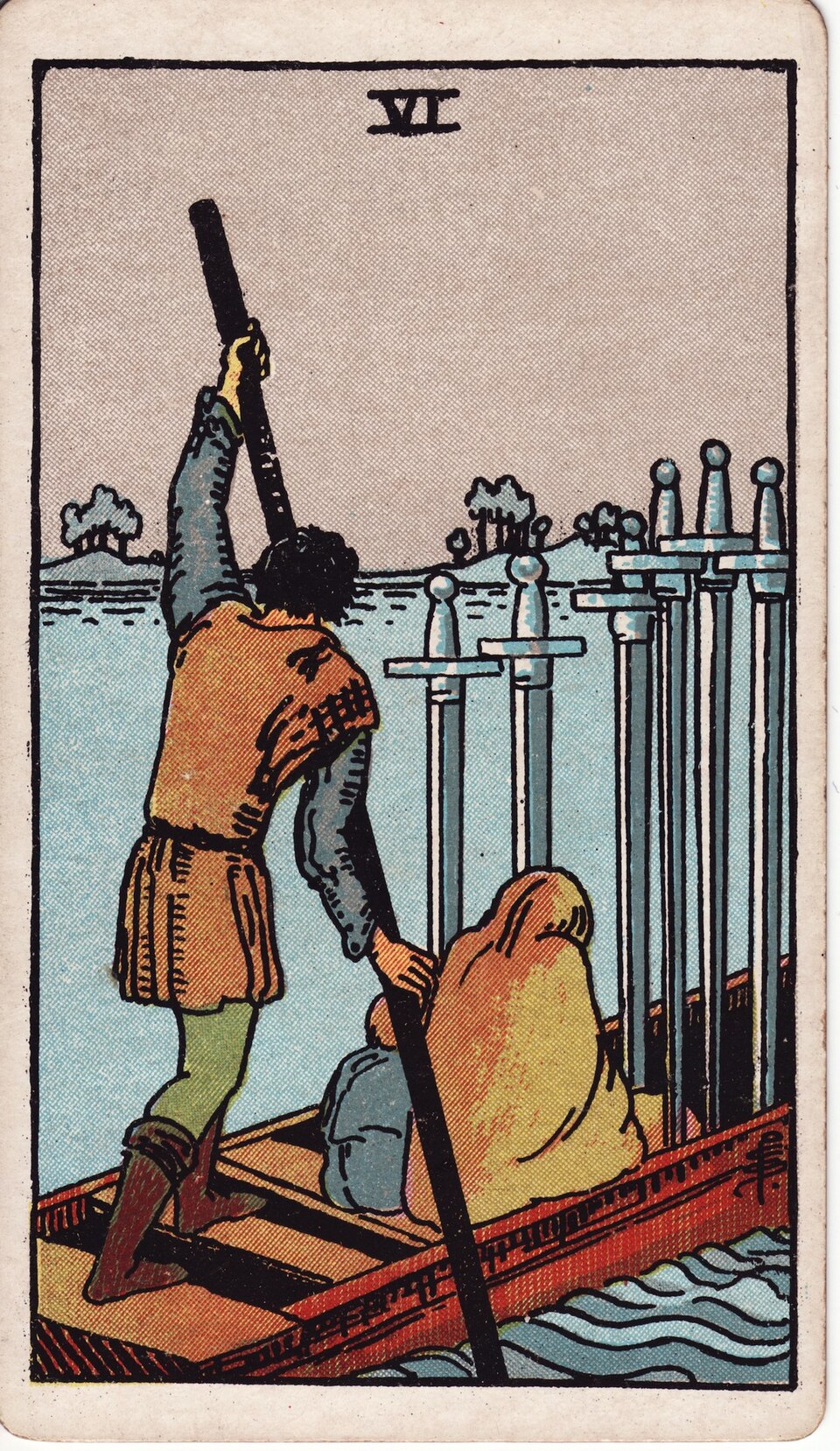
Introduction
The Six of Swords is a crossing: a boat, seated figures, swords carried along. It is passage out of difficulty, not yet arrival.
Upright meaning
Upright, it can describe moving on, therapy as ferry, travel, or a mental transition. You may take the swords with you; they are lessons, not only wounds.
Reversed meaning
Reversed, difficulty leaving, or a crossing that feels too slow. Name the far bank.
Love
In love, a calmer chapter after strain, or leaving together. Logistics matter as much as hope.
Career
At work, role changes, relocating a project, or exiting a toxic process. Plan the boat.
General interpretation
The Six of Swords is a crossing: a boat, seated figures, swords carried along. Read generally, the Six of Swords marks recovery, adjustment, or a return to something familiar — a good moment to ask what thought, language, and conflict actually need, rather than what a keyword list suggests. State the situation in plain sentences, then let the usual shorthand for the Six of Swords refine it rather than replace it.
Symbolism
Water and a distant shore are study images of gradual, not cinematic, change.
Questions for reflection
- What am I in the middle of crossing?
- Which thoughts am I bringing because they are useful, not because they are familiar?
- What small, checkable step would honour the Six of Swords within the next three days?
Related cards and spreads
FAQ
It can. It more reliably describes passage from one state to another.
Describe a single detail you notice in the Six of Swords, connect it to your question in a line or two, and close the entry with a next step. Do not treat the card as a command.
Sources and further reading
The image above is the Six of Swords from the 1909 Rider–Waite–Smith deck, drawn by Pamela Colman Smith (public domain, via Wikimedia Commons). Background on the suit is collected at Suit of Swords on Wikipedia. A period commentary on the cards, The Pictorial Key to the Tarot (1911, public domain), is available in full at Wikisource.
These notes are cultural study material. They do not predict events, diagnose health, or replace professional advice.