Introduction
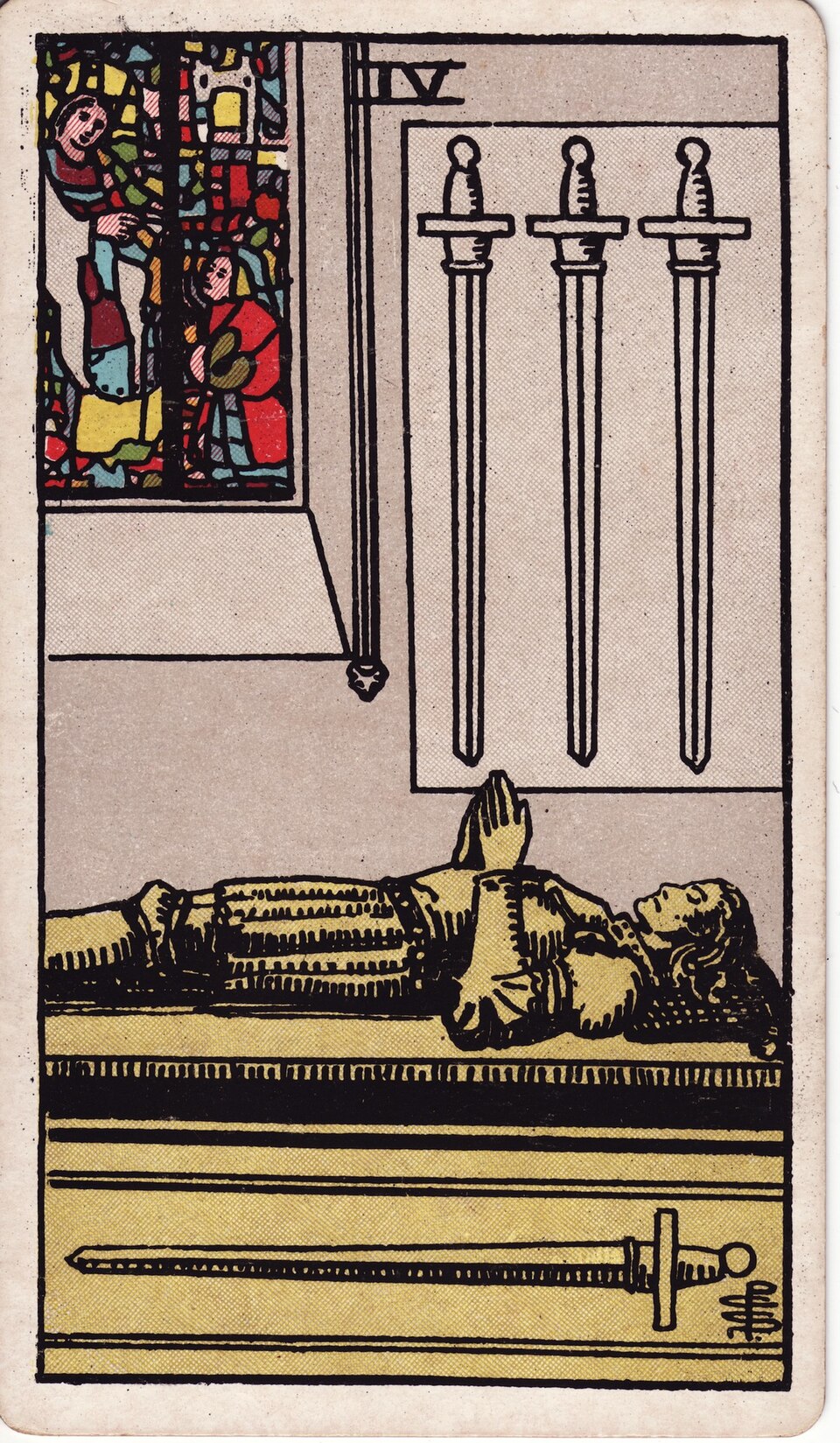
The Four of Swords is a rest of the mind: a figure recumbent, swords stored. It is recovery, retreat, and the intelligence of not fighting this hour.
Upright meaning
Upright, it can describe sleep, a break from argument, or strategic pause. Rest is a method.
Reversed meaning
Reversed, restlessness, or rest that has become exile. Rejoin with a smaller scope.
Love
In love, space, cooling a fight, or a partner who needs quiet. Space should have a return time if the bond is continuing.
Career
At work, time off, research leave, or not answering after hours. Exhausted thought makes poor strategy.
General interpretation
The Four of Swords is a rest of the mind: a figure recumbent, swords stored. In a general reading, use the Four of Swords to locate a pause to take stock before more energy is spent, then check how thought, language, and conflict are behaving in the querent’s own account. Before borrowing the short phrase usually attached to the Four of Swords, write the situation in your own plain words.
Symbolism
A tomb-like scene in older decks is metaphorical rest, not a death omen.
Questions for reflection
- What would actual rest look like tonight?
- Which argument can wait until I have slept?
- If the Four of Swords describes your current situation, what could you actually test before the week ends?
Related cards and spreads
FAQ
It can discuss recovery. It is not a diagnosis.
Start from one visual detail in the Four of Swords, write how it answers the question you asked, and set one small task to follow up. Do not treat the card as a command.
Sources and further reading
The Four of Swords is shown here as drawn by Pamela Colman Smith for the 1909 Rider–Waite–Smith deck — public domain, via Wikimedia Commons. The suit’s wider tradition is described at Suit of Swords on Wikipedia. For the primary text behind the deck, see The Pictorial Key to the Tarot (1911, public domain).
These notes are cultural study material. They do not predict events, diagnose health, or replace professional advice.