Introduction
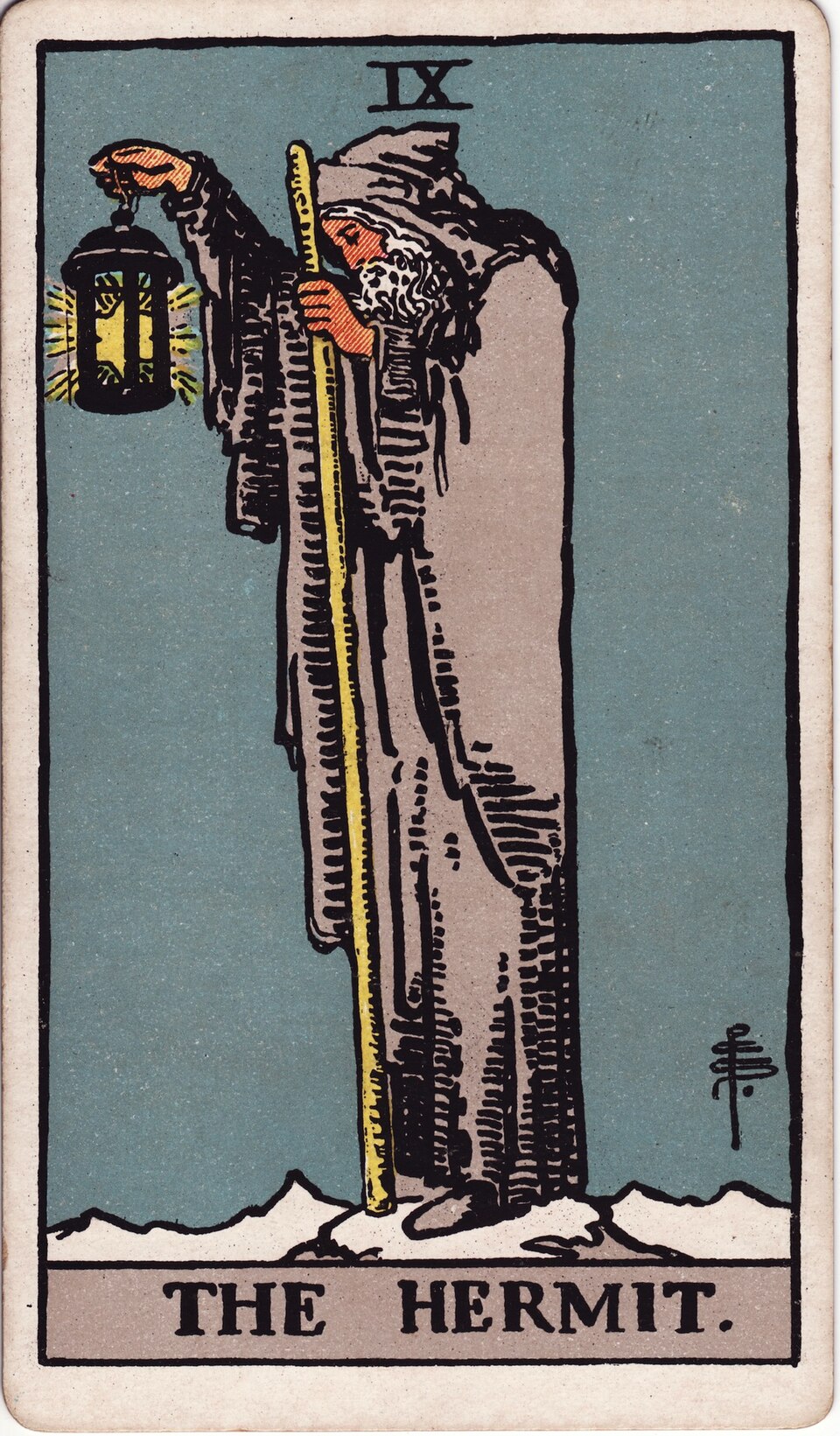
The Hermit is a lantern on a path. The figure is usually older, standing apart, lighting a small circle rather than a stadium. Students use it to talk about solitude that serves inquiry, as distinct from isolation that serves shame.
Upright meaning
Upright, The Hermit can describe research retreats, honest alone time, mentorship from a distance, and the need to reduce noise. It is a strong card for editing, grief work, and asking better questions before asking more people.
Reversed meaning
Reversed, it can show withdrawal that has gone stale, loneliness mistaken for superiority, or refusing help that would actually clarify the path. It may also describe a teacher who will not come down the mountain. Check whether solitude still has a purpose.
Love
In love, The Hermit can mean needing space, a slow-to-trust temperament, or a relationship that grows through parallel inner work. It can also describe emotional unavailability. Do not romanticize absence.
Career
Career contexts include independent research, specialist expertise, and sabbaticals. It can support deep work blocks. It can also warn that a team cannot find you, or that you are hiding in busyness that looks like study.
General interpretation
The Hermit is the patron of tarot journaling. Light one question at a time. If a spread feels loud, draw this card as a reminder to interpret fewer cards more carefully.
Symbolism
The lantern is limited light: enough for the next steps. Snow or high ground, when present, suggests conditions that strip distraction. A staff is support, not a weapon. Look at whether the figure faces toward or away from the viewer.
Questions for reflection
- What noise do I need to reduce in order to hear the real question?
- Is my solitude a workshop or a hiding place?
- Who is a trustworthy source if I need one conversation, not twenty opinions?
Related cards and spreads
FAQ
Not automatically. It asks for purposeful quiet. Relationships and jobs still have duties you may need to negotiate rather than vanish from.
Yes. It can be you in a teaching role or someone whose guidance is quiet and specific.
These notes are cultural study material. They do not predict events, diagnose health, or replace professional advice.