Introduction
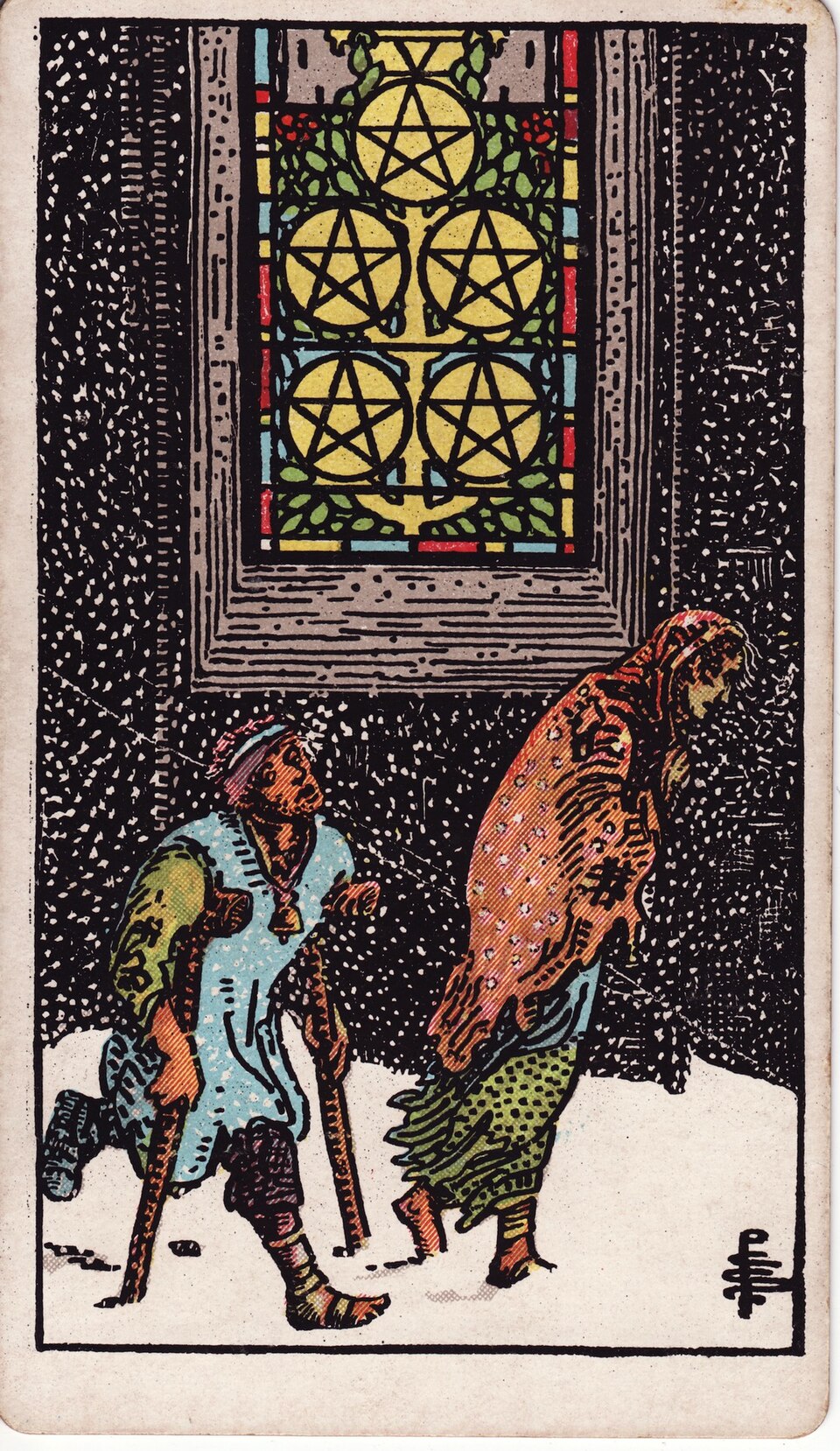
The Five of Pentacles is cold season: figures outside a lit window. It is hardship, exclusion, and the need to ask for help that already exists.
Upright meaning
Upright, it can describe money stress, illness in the story (not a diagnosis), or feeling left out. Look for the window: aid, friends, a clinic, a policy.
Reversed meaning
Reversed, recovery beginning, or pride delaying help. Help is allowed.
Love
In love, a couple against winter, or isolation inside a bond. Solidarity is practical: food, heat, appointments.
Career
At work, job loss themes, underpayment, or being outside a clique. Material problems need material responses. This site is not financial advice.
General interpretation
The Five of Pentacles is cold season: figures outside a lit window. Read generally, the Five of Pentacles marks disruption or contest that changes the situation — a good moment to ask what money, health, and the material side of life actually need, rather than what a keyword list suggests. State the situation in plain sentences, then let the usual shorthand for the Five of Pentacles refine it rather than replace it.
Symbolism
Stained glass in some decks is a bitter teaching: support may be near and still unseen.
Questions for reflection
- What help exists that I have not knocked on?
- Which problem is material and needs a material plan this week?
- What small, checkable step would honour the Five of Pentacles within the next three days?
Related cards and spreads
FAQ
It can discuss hardship. It is not a sentence, and it is not financial advice.
Describe a single detail you notice in the Five of Pentacles, connect it to your question in a line or two, and close the entry with a next step. Do not treat the card as a command.
Sources and further reading
The image above is the Five of Pentacles from the 1909 Rider–Waite–Smith deck, drawn by Pamela Colman Smith (public domain, via Wikimedia Commons). Background on the suit is collected at Suit of Pentacles on Wikipedia. A period commentary on the cards, The Pictorial Key to the Tarot (1911, public domain), is available in full at Wikisource.
These notes are cultural study material. They do not predict events, diagnose health, or replace professional advice.