Introduction
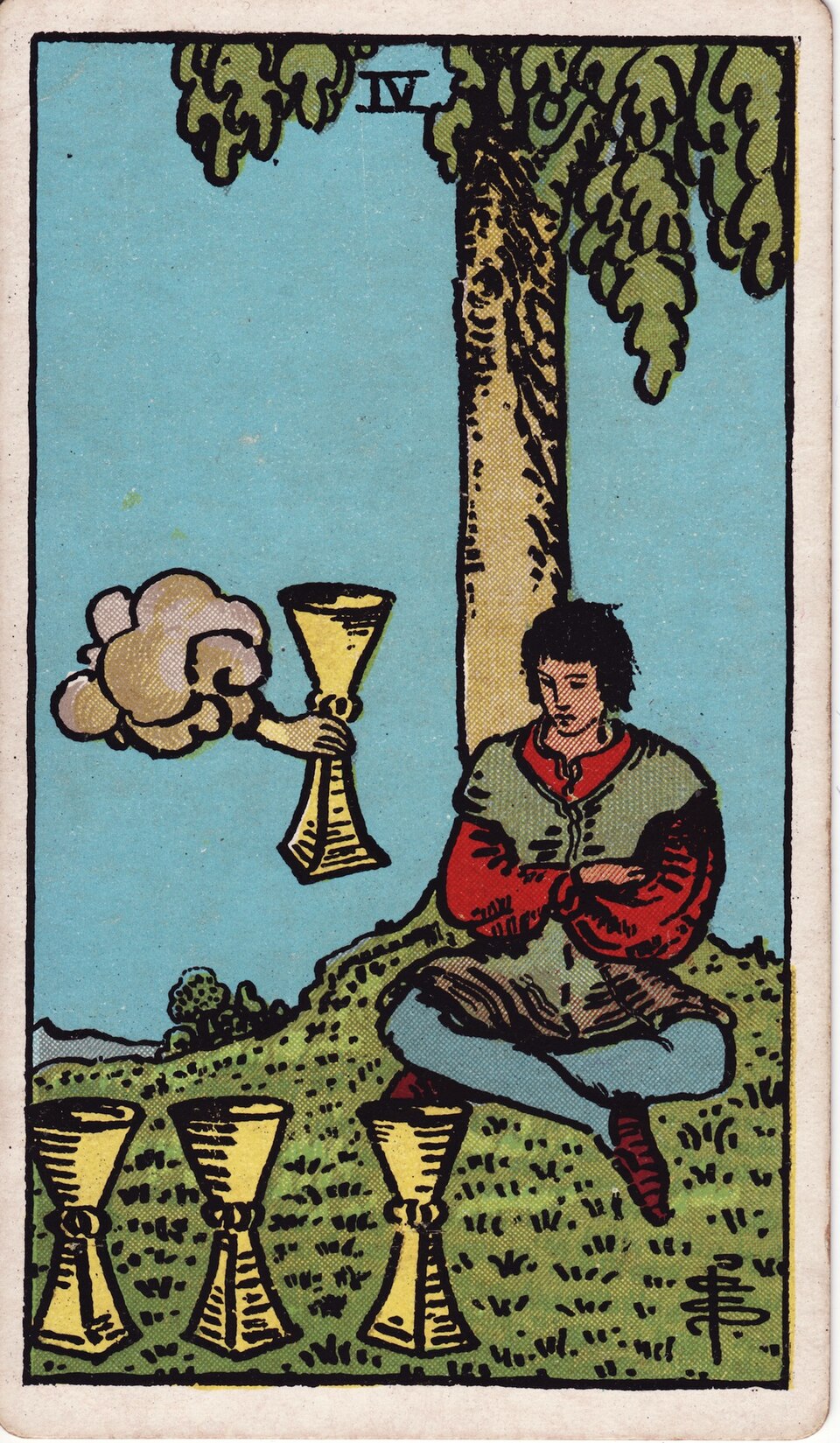
The Four of Cups is a pause in feeling: a figure looking inward while another cup is offered. It is apathy, protection, or a needed boredom.
Upright meaning
Upright, it can describe dissatisfaction, meditation, or not reaching for the next emotional snack. Ask whether the offered cup is actually good.
Reversed meaning
Reversed, a yes after a long no, or restlessness that ends a useful retreat. Re-enter slowly.
Love
In love, withdrawal, taking stock, or missing a decent offer because it is not theatrical. Honesty about desire helps.
Career
At work, disengagement, sabbatical of attention, or burnout that looks like boredom. Workload may be the real issue.
General interpretation
The Four of Cups is a pause in feeling: a figure looking inward while another cup is offered. Read generally, the Four of Cups marks a pause to take stock before more energy is spent — a good moment to ask what feeling, connection, and inner life actually need, rather than what a keyword list suggests. State the situation in plain sentences, then let the usual shorthand for the Four of Cups refine it rather than replace it.
Symbolism
A tree and a seated figure in many decks show that the pause has a landscape; it is not empty.
Questions for reflection
- Am I protecting myself or hiding from a real invitation?
- What would make feeling available again without self-betrayal?
- What small, checkable step would honour the Four of Cups within the next three days?
Related cards and spreads
FAQ
It can resemble low mood. Cards are not a diagnosis. If mood is heavy, a clinician is the right resource.
Describe a single detail you notice in the Four of Cups, connect it to your question in a line or two, and close the entry with a next step. Do not treat the card as a command.
Sources and further reading
The image above is the Four of Cups from the 1909 Rider–Waite–Smith deck, drawn by Pamela Colman Smith (public domain, via Wikimedia Commons). Background on the suit is collected at Suit of Cups on Wikipedia. A period commentary on the cards, The Pictorial Key to the Tarot (1911, public domain), is available in full at Wikisource.
These notes are cultural study material. They do not predict events, diagnose health, or replace professional advice.