Introduction
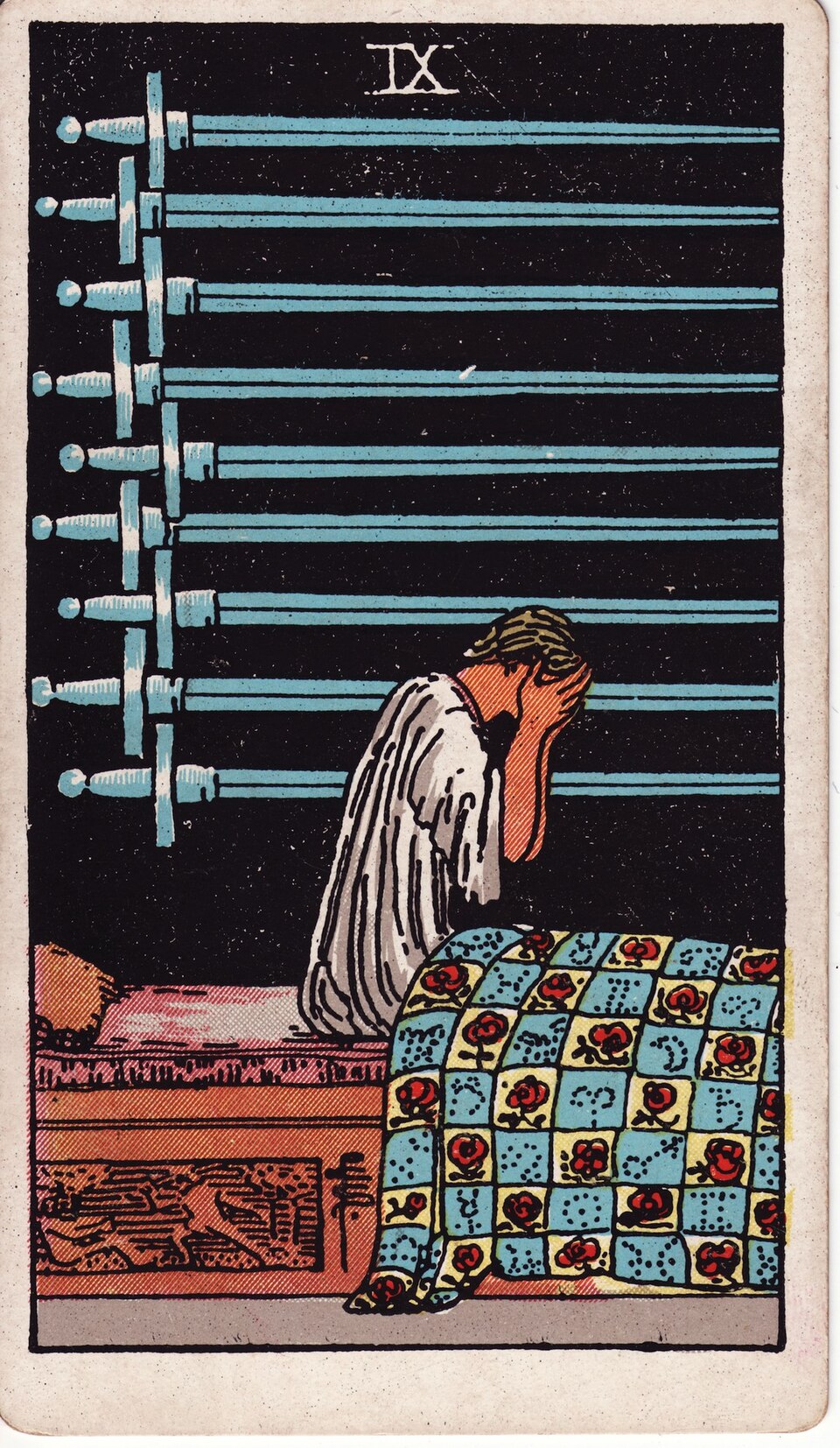
The Nine of Swords is night thought: a figure sitting up, swords on the wall. It is worry, rumination, and the 3 a.m. committee.
Upright meaning
Upright, it can describe anxiety, guilt, or a problem that feels larger in the dark. Write the worries into a list for morning. If they are overwhelming, professional help is appropriate.
Reversed meaning
Reversed, lightening, or shame about needing help. Relief is allowed to be practical: sleep, talk, a clinician.
Love
In love, fear about a relationship, or harm from words. Night stories need daylight checks.
Career
At work, dread before a meeting, or a mistake replaying. Prepare, then stop rehearsing.
General interpretation
The Nine of Swords is night thought: a figure sitting up, swords on the wall. Read generally, the Nine of Swords marks the late stage where the outcome is close but not settled — a good moment to ask what thought, language, and conflict actually need, rather than what a keyword list suggests. State the situation in plain sentences, then let the usual shorthand for the Nine of Swords refine it rather than replace it.
Symbolism
A quilt with roses in some decks hints that the waking world still contains care.
Questions for reflection
- Which worry can be tested by noon?
- What would I tell a friend who had this night?
- What small, checkable step would honour the Nine of Swords within the next three days?
Related cards and spreads
FAQ
No. It can resemble anxiety. Cards do not diagnose. Seek qualified care when needed.
Describe a single detail you notice in the Nine of Swords, connect it to your question in a line or two, and close the entry with a next step. Do not treat the card as a command.
Sources and further reading
The image above is the Nine of Swords from the 1909 Rider–Waite–Smith deck, drawn by Pamela Colman Smith (public domain, via Wikimedia Commons). Background on the suit is collected at Suit of Swords on Wikipedia. A period commentary on the cards, The Pictorial Key to the Tarot (1911, public domain), is available in full at Wikisource.
These notes are cultural study material. They do not predict events, diagnose health, or replace professional advice.